


B&G
B&G, Simrad ForwardScan Long Stem Transducer
Pickup available at Mercury Yacht Harbour
Usually ready in 2-4 days
Manufacturer-backed extended cover provided by Navico — add up to 3 extra years.
Extended cover is added to your order and confirmed with your warranty documentation.
Description
B&G, Simrad ForwardScan Technology ForwardScan provides forward-looking, two-dimensional sonar imaging of the bottom ahead of your boat. In shallow, unfamiliar, or poorly-charted waters, ForwardScan is a powerful defence against running around, and an invaluable tool for locating secure sites to drop anchor. The ForwardScan transducer operates at 180kHz to reduce interference from traditional 200kHz echosounders, and provides: Maximum forward view of 8X your current depth e.g. at 3m (10ft) depth, see up to 24m (80ft) ahead. Nominal forward view of 4-5X your current depth e.g. At 3m (10ft) depth, see 12-15m (40-50ft) ahead. ForwardScan Long Stem transducer with Sleeve & Plug.
PRODUCT DETAILS
- Easy to use
- Forward-looking 2D sonar imaging
- Bottom Colour Tracking for a simplified bottom view
- Heading Line View combines ForwardScan depth data into heading line on charts
- Shallow depth alarm
- Maximum forward view of 8X current depth, nominally 4-5X current depth
- Operates at 180 kHz, reducing interference from traditional 200 kHz echosounders
- Built-in temperature sensor
- 50.8 mm (2 inch) stainless steel through-hull fitting
- Long-stem design for use with thick or steeply-inclined hulls (up to 47.6mm thickness, up to 28 degrees deadrise)
- ForwardScan Long Stem transducer
- Long Stem stainless steel through-hull sleeve
- Blanking plug
- ForwardScan Long Stem fairing block
- 9 m (30 ft) cable
No exploded diagram available for this product.
No compatible transducers listed for this product.


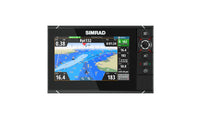
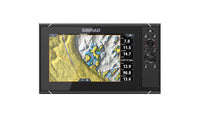
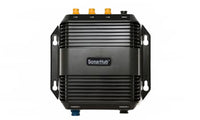

Sonar
| Operating Frequency | 180 kHz |
| View Type | Forward-looking 2D |
| Maximum Forward Range | 91 m (300 ft) |
| Forward View | Up to 8x current depth (nominally 4-5x) |
| Transducer Angle Adjustment | +/- 15 degrees |
| Temperature Sensor | Built-in |
Transducer
| Type | Through-hull, long stem |
| Through-Hull Material | Stainless steel |
| Hull Compatibility | Hulls up to 47.6 mm (1 7/8 inch) thick and up to 28 degrees deadrise |
| Self-Closing Valve | Yes, transducer removable on water |
| Cable Length | 9 m |
Connectivity
| Connection | StructureScan HD port (black 9-pin) on compatible display or SonarHub |
General
| Warranty | 2 Years |
No videos available for this product.


