


Raymarine
Raymarine EV-1 Sensor Core
Pickup available at Mercury Yacht Harbour
Usually ready in 2-4 days
Raymarine cover is 2 years (3 with 90-day registration). Add 1 or 2 more years with HME Care Plus.
Extended cover is added to your order and confirmed with your warranty documentation.
Description
The Raymarine EV-1 Sensor Core (E70096) packs a 3-axis accelerometer, 3-axis compass and 3-axis gyro angular rate sensor into a sealed IPx6 puck just 140 mm across and 0.29 kg in weight. Monitoring pitch, roll, yaw and heading simultaneously, it lets an Evolution autopilot hold course to within +/- 2 degrees while it adapts to sea conditions without user calibration: the rudder gain, rudder damping, counter rudder and compass swing routines required by earlier autopilots are no longer necessary.
Installation is flexible. The EV-1 mounts on a flat deck, on the supplied wall bracket, or on a mast or bulkhead, above or below decks, and draws just 30 mA from the SeaTalkng backbone. It works with the ACU-100, ACU-150, ACU-200, ACU-300 and ACU-400 actuator control units and is operated from a p70s or p70Rs pilot controller or a compatible Raymarine Axiom, Axiom 2 Pro or Axiom 2 XL chartplotter. A rudder angle reference transducer (M81105) is recommended for optimum performance.
PRODUCT DETAILS
- 9-axis AHRS: 3-axis accelerometer, 3-axis compass and 3-axis gyro in one housing
- Combines heading sensor and Evolution autopilot processor in a single unit
- Course keeping accurate to within +/- 2 degrees in all conditions
- No calibration required: no rudder gain, damping, counter rudder or compass swing set-up
- Replaces the fluxgate compass of earlier autopilot systems
- Deck, bracket, wall or mast mounting, above or below decks
- Powered by the SeaTalkng backbone, drawing just 30 mA (LEN 1)
- IPx6 waterproof rating
- EV sensor
- Mounting trim
- Mounting tray
- Large sealing ring
- Small sealing ring
- Wall mounting bracket
- Screws for deck or bracket mounting
- Screws for wall bracket
- SeaTalkng spur cable, 1 m (3.3 ft)
- Documentation pack
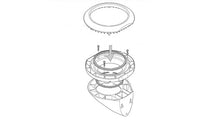
No exploded diagram available for this product.
No compatible transducers listed for this product.
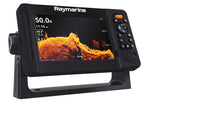
Raymarine Element 7 HV Chartplotter with HyperVision Sonar
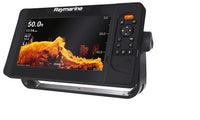
Raymarine Element 9 HV Chartplotter with HyperVision Sonar
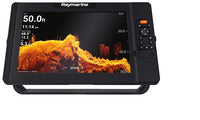
Raymarine Element 12 HV Chartplotter with HyperVision Sonar
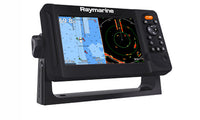
Raymarine Element 7 S Chartplotter with CHIRP Sonar
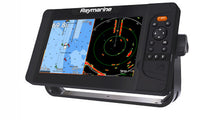
Raymarine Element 9 S Chartplotter with CHIRP Sonar

Raymarine Element 12 S Chartplotter with CHIRP Sonar

Raymarine ACU-100 Actuator Control Unit

Raymarine ACU-150 Actuator Control Unit

Raymarine ACU-200 Actuator Control Unit

Raymarine Evolution Cabling Kit (SeaTalkng)

Raymarine EV-1 / EV-2 Sealing Ring Pack

Raymarine ACU-300 Actuator Control Unit

Raymarine ACU-400 Actuator Control Unit

Raymarine EV-1 / EV-2 Wall Bracket
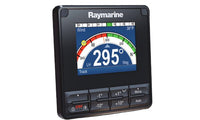
Raymarine p70s Autopilot Control Head
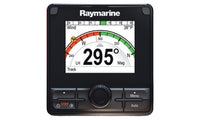
Raymarine p70Rs Autopilot Control Head
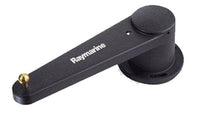
Raymarine Autopilot Rudder Angle Transducer
Raymarine Axiom 2 Pro 9 S
Raymarine Axiom 2 Pro 9 RVM

Raymarine Axiom 2 Pro 12 S
Raymarine Axiom 2 Pro 12 RVM
Raymarine Axiom 2 Pro 16 S
Raymarine Axiom 2 Pro 16 RVM
Raymarine Axiom 2 XL 16 Chartplotter
Raymarine Axiom 2 XL 19 Chartplotter
Raymarine Axiom 2 XL 22 Chartplotter
Raymarine Axiom 2 XL 24 Chartplotter
Physical
| Diameter | 140 mm (5.5 in) |
| Depth (including mounting enclosure) | 35 mm (1.4 in) |
| Depth (including wall bracket) | 95 mm (3.8 in) |
| Weight | 0.29 kg (0.64 lbs) |
Sensors
| Sensors | 3-axis digital accelerometer, 3-axis digital compass, 3-axis gyro digital angular rate sensor |
Power
| Nominal supply voltage | 12 V (powered by SeaTalkng system) |
| Operating voltage range | 10.8 V to 15.6 V dc |
| Power consumption (taken from SeaTalkng system) | 30 mA |
| SeaTalkng LEN (Load Equivalency Number) | 1 |
Data connections
| Data connections | SeaTalkng; DeviceNet (DeviceNet connection not currently supported) |
Environmental
| Operating temperature | -25 °C to +55 °C (-13 °F to +131 °F) |
| Storage temperature | -30 ºC to +70 ºC (-22 °F to +158 °F) |
| Relative humidity | Max 93% |
| Waterproof rating | IPx6 |
Conformance
| EMC compliance | Europe: 2004/108/EC. Australia and New Zealand: C-Tick, Compliance Level 2 |


